Supporting case study
A research-led direction for ANA's global website
All Nippon Airways
In 2019, I assessed earlier agency work, interviewed ANA stakeholders, and helped facilitate a two-day design-thinking workshop in Tokyo. I turned the findings into UX 2020, design principles and a roadmap for western business travelers.
- Role
- UX Researcher
Facts
- Client
- All Nippon Airways
- Employer
- IBM iX
- Dates
- March to July 2019
- Locations
- Chicago and Tokyo
- Contribution
- Research, workshop facilitation, design principles, roadmap, and concepts
- Collaboration
- ANA stakeholders and the IBM iX Chicago and Tokyo teams
- Work shown
- Traveler persona and desktop and mobile concepts
Understand the work already on the table
ANA was reconsidering its Japanese and English web experiences when I joined the IBM iX team. I worked in Chicago and Tokyo on the research and direction for the global website, with western business travelers as a focus.
I started by assessing the previous agency work, comparing the existing site with US and European airline experiences, and examining performance and usability issues. Stakeholder interviews helped me understand ANA's institutional strengths and the obstacles the redesign would need to address.
The previous agency had already conducted customer research. My contribution was to assess that material and add stakeholder interviews and experience review, then help the team turn what we learned into a direction.
Put the traveler into the workshop
I helped facilitate a two-day design-thinking session in Tokyo. We worked through breakdowns in the current experience and explored how a future service could respond to traveler needs.
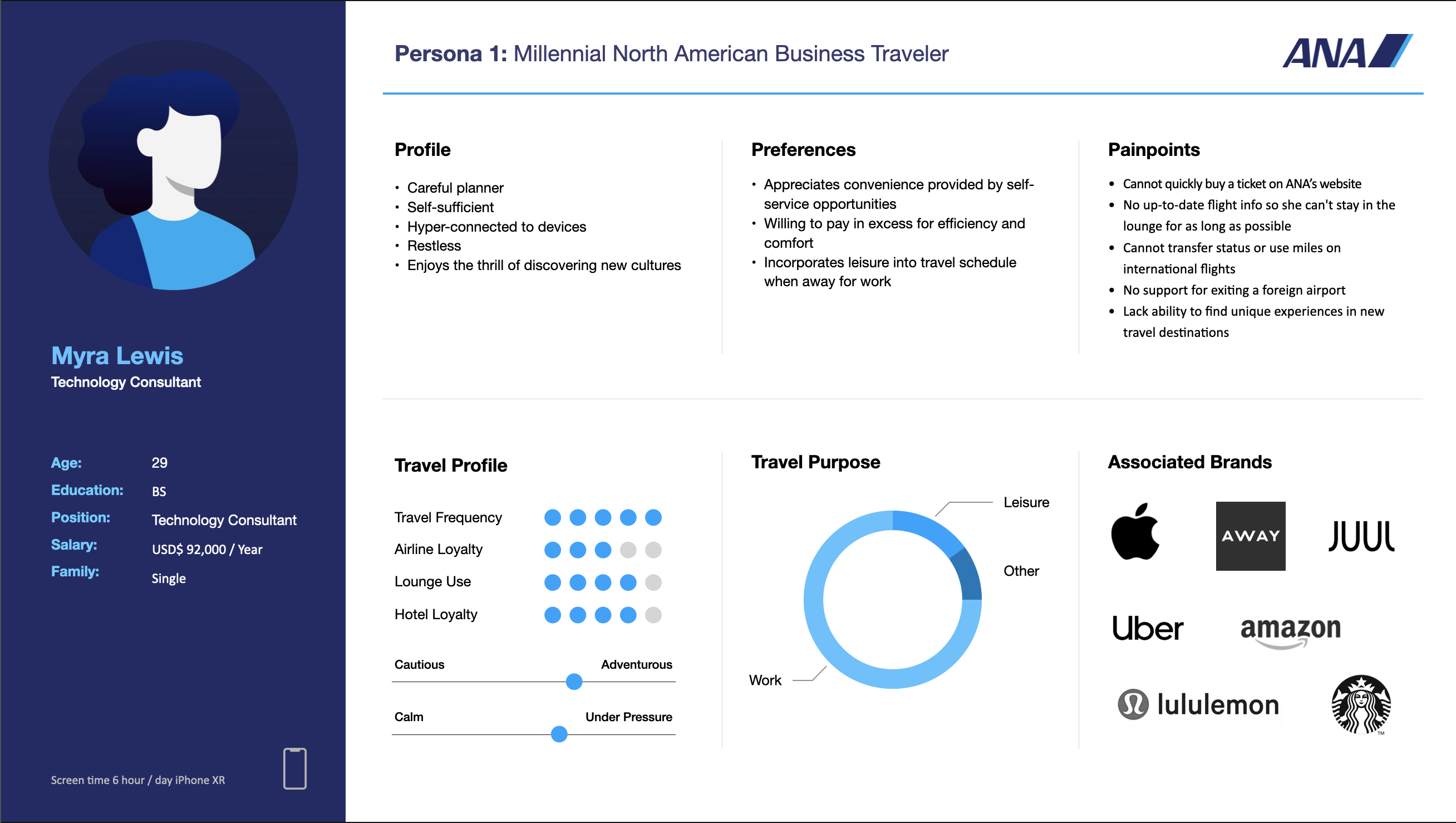
My traveler persona gives that conversation a concrete focus: a North American business traveler who values self-service and efficiency but also wants to discover places around a work trip. The artifact brings booking friction, timely flight information, and arrival support into the same discussion.
Connect the traveler to the design questions
Explore booking and the trip around it
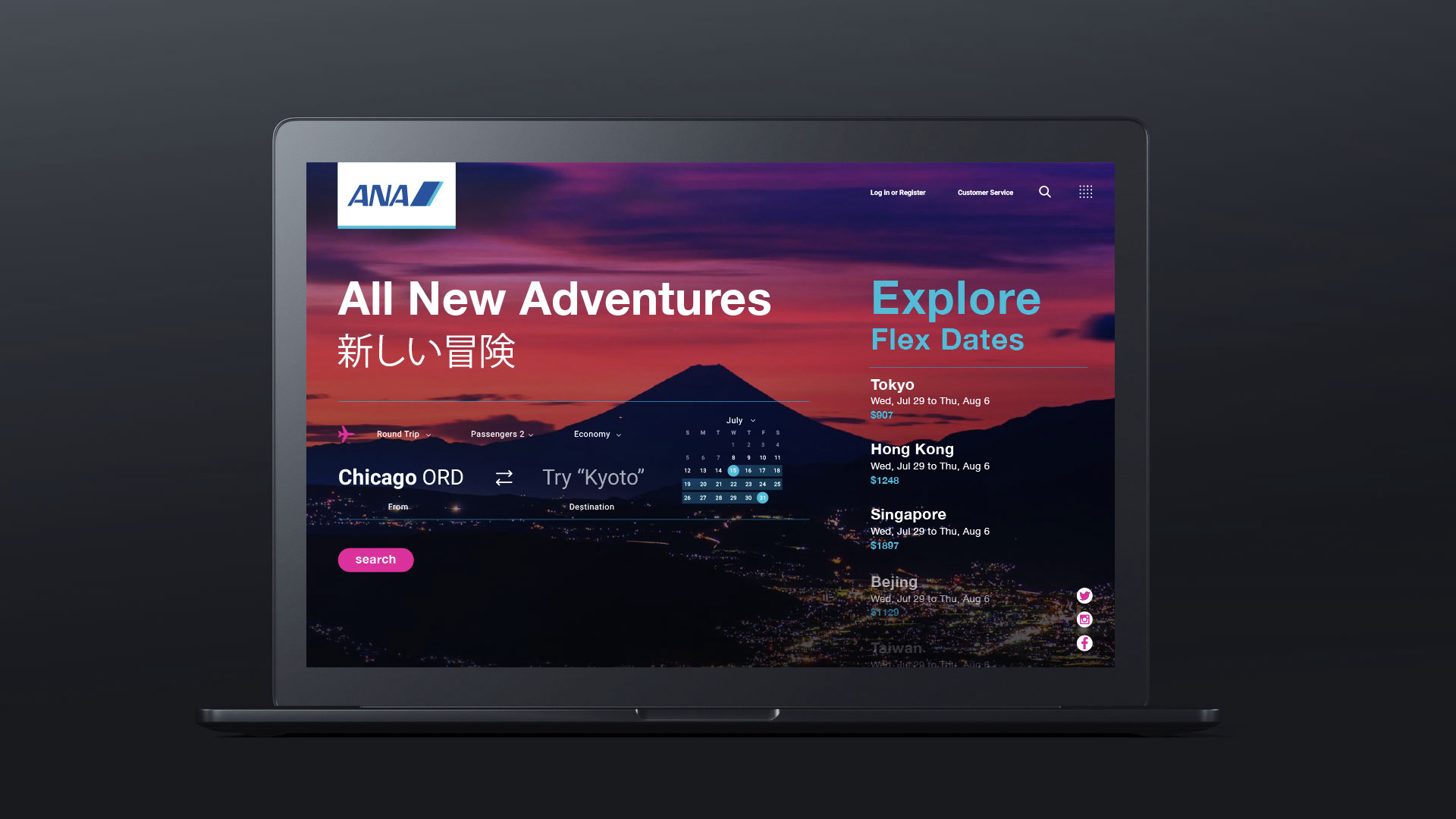
I made desktop and mobile concepts to give the direction a visual form. The desktop exploration places a flight search beside flexible-date destination ideas. That lets a specific booking task and a more open-ended trip search share the page.
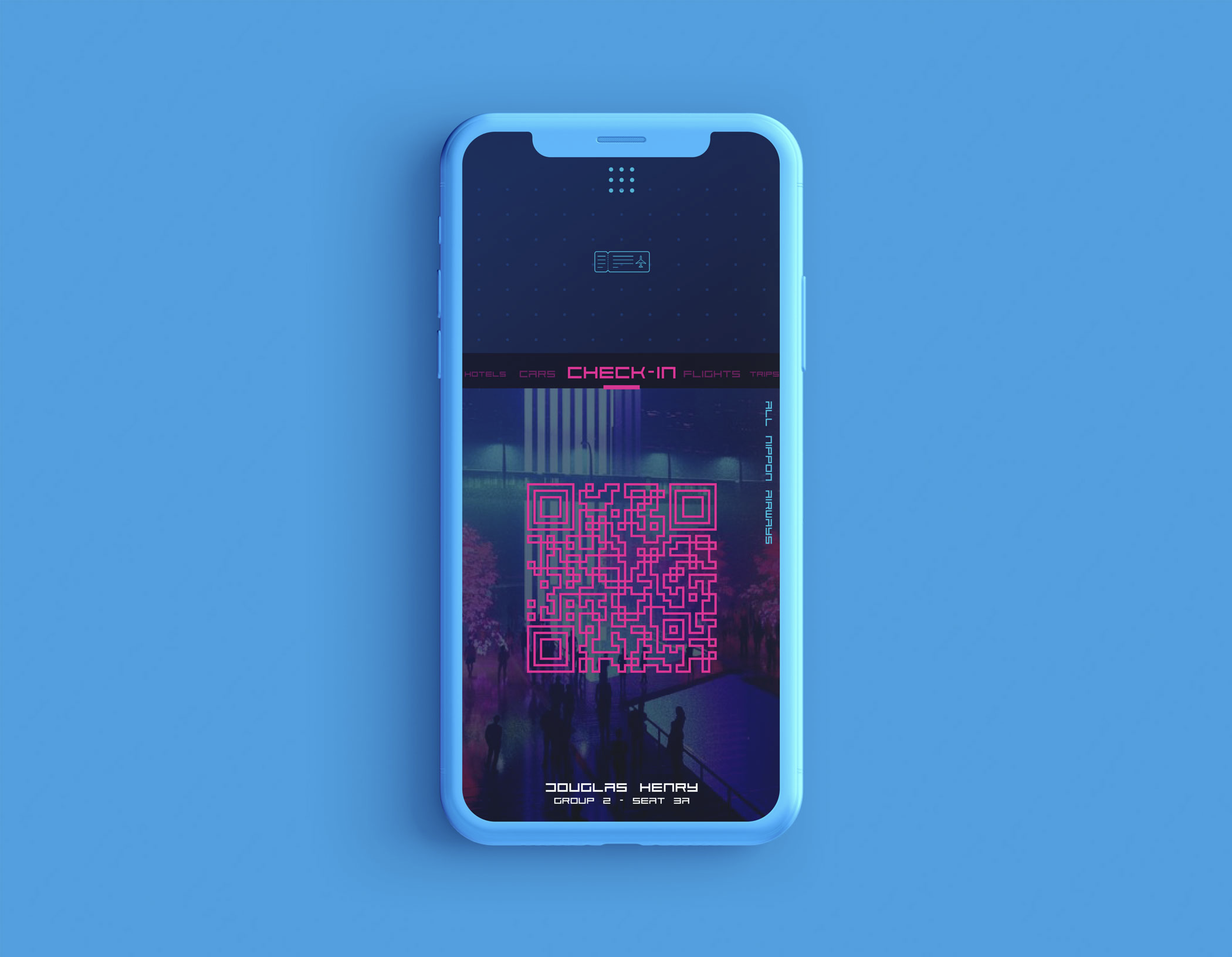
The mobile concept explores a different moment: check-in and a boarding pass, with hotels, cars, flights, and trips alongside it. Its vivid color and night-time imagery explore how the travel experience could carry more character across screens.
I used these concepts to explore visual and interaction direction within the wider IBM iX engagement.
Inspect the original concepts
Give the team a direction to work from
I brought the research and workshop findings into UX 2020, a set of design principles and a feature roadmap focused on western business travelers. The work connected what ANA wanted to improve with the customer needs the team had been discussing.
The roadmap belonged to a collaborative engagement with ANA and the IBM iX teams in Chicago and Tokyo. My contribution was research, facilitation, direction, and the concepts shown here.
Results
- I assessed existing agency work, interviewed stakeholders, and helped facilitate the two-day Tokyo workshop.
- I produced UX 2020 design principles and a feature roadmap, supported by traveler synthesis and visual concepts.
Evidence limit
Research synthesis, design principles, roadmap, and original concepts from the 2019 global-website engagement.
Related work
United AirlinesSupporting case study
From thirteen systems to one service task
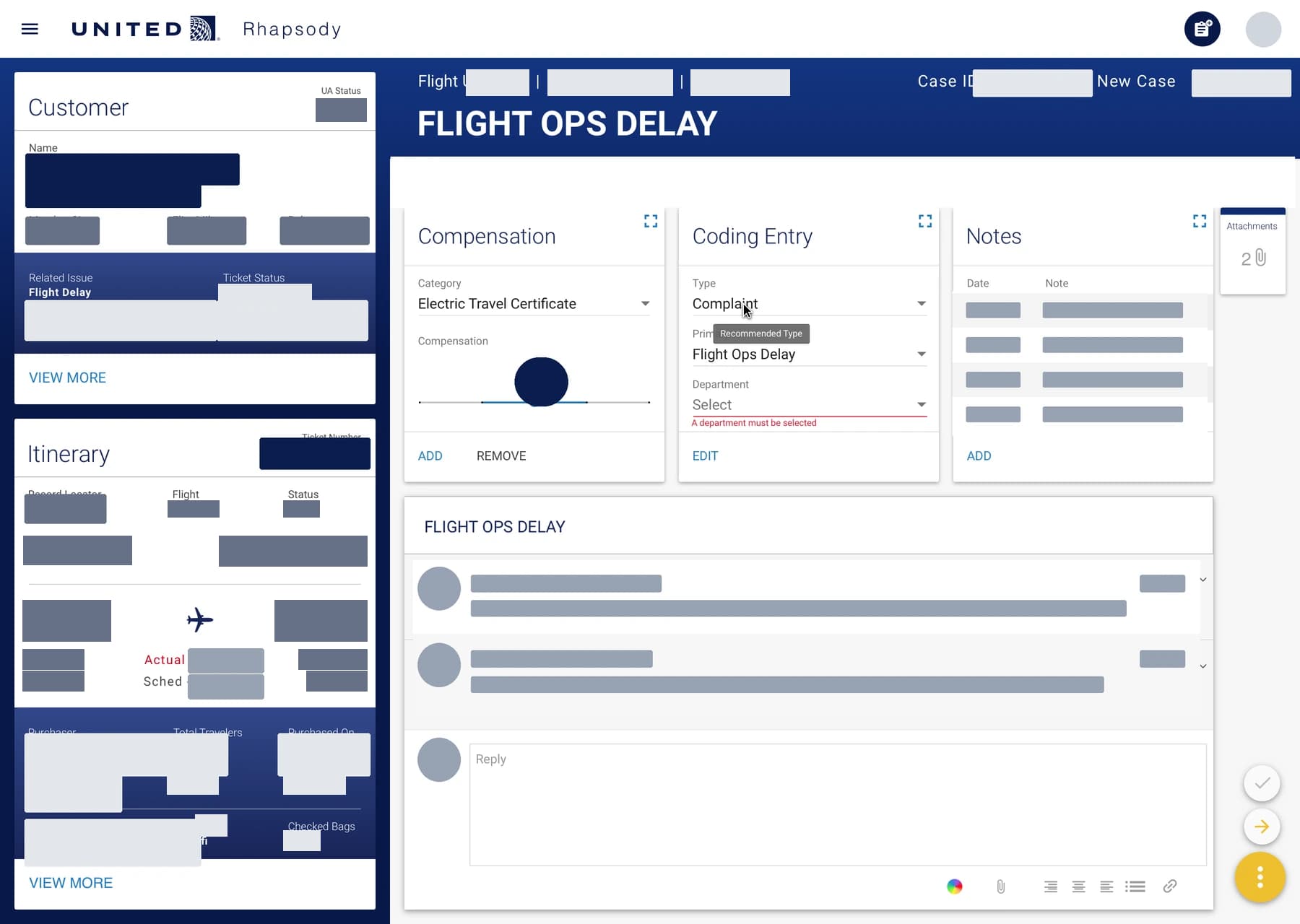
At IBM iX, I helped consolidate thirteen customer-care systems into one task-centered dashboard. During the pilot, average throughput rose from two to seven complaint resolutions per hour.
- Information architecture
- Interaction design
- Ethnographic research
- Service design
BPSupporting case study
A coffee order starts with the right site
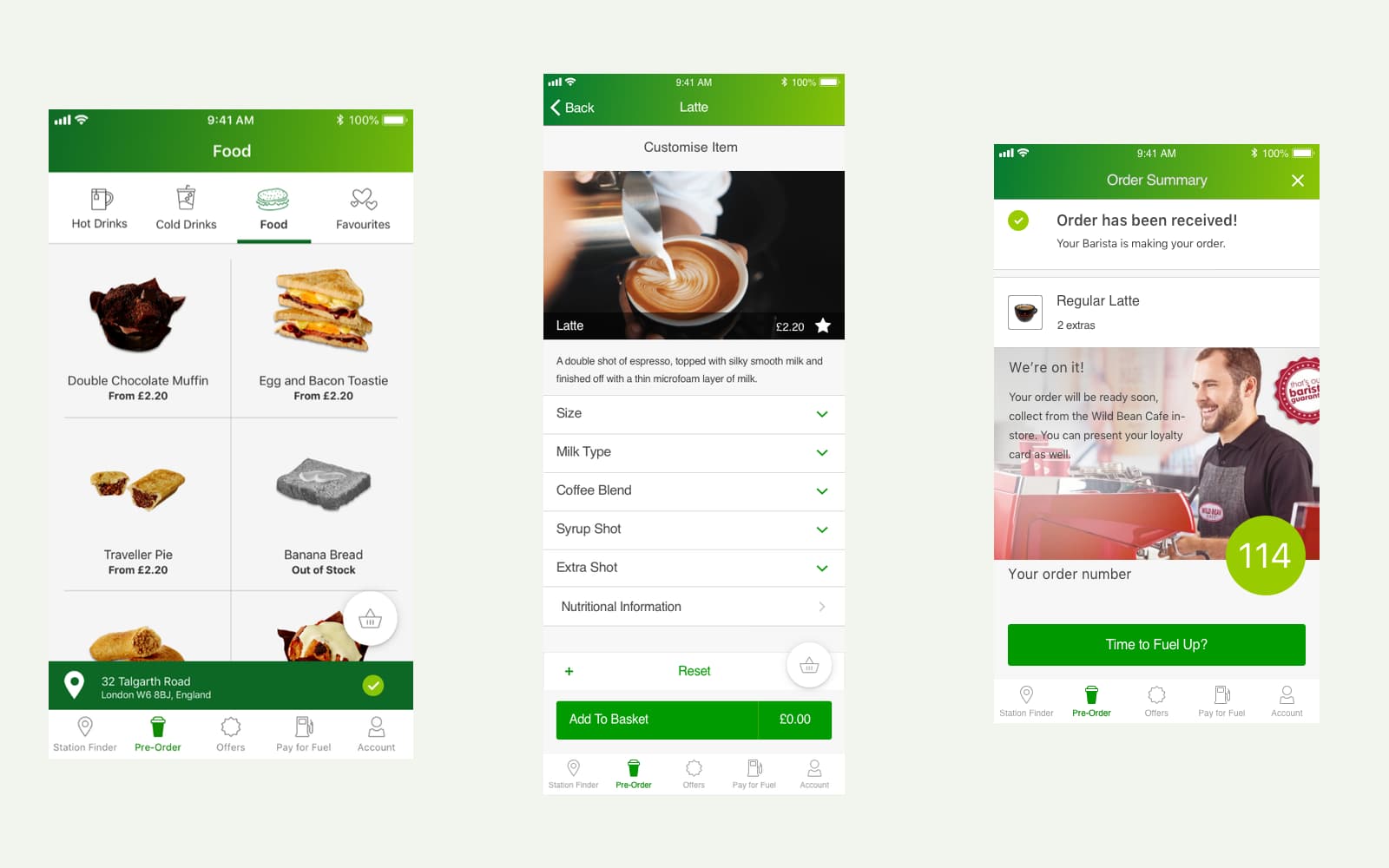
I worked with BP product owners in the UK and Australia on coffee pre-ordering for BPme. I refined the requirements through research, then created wireframes and a clickable prototype that carried the order through to collection.
- Interaction design
- Mobile commerce
- Prototyping
- Service design